How To Actually "Just Do It"
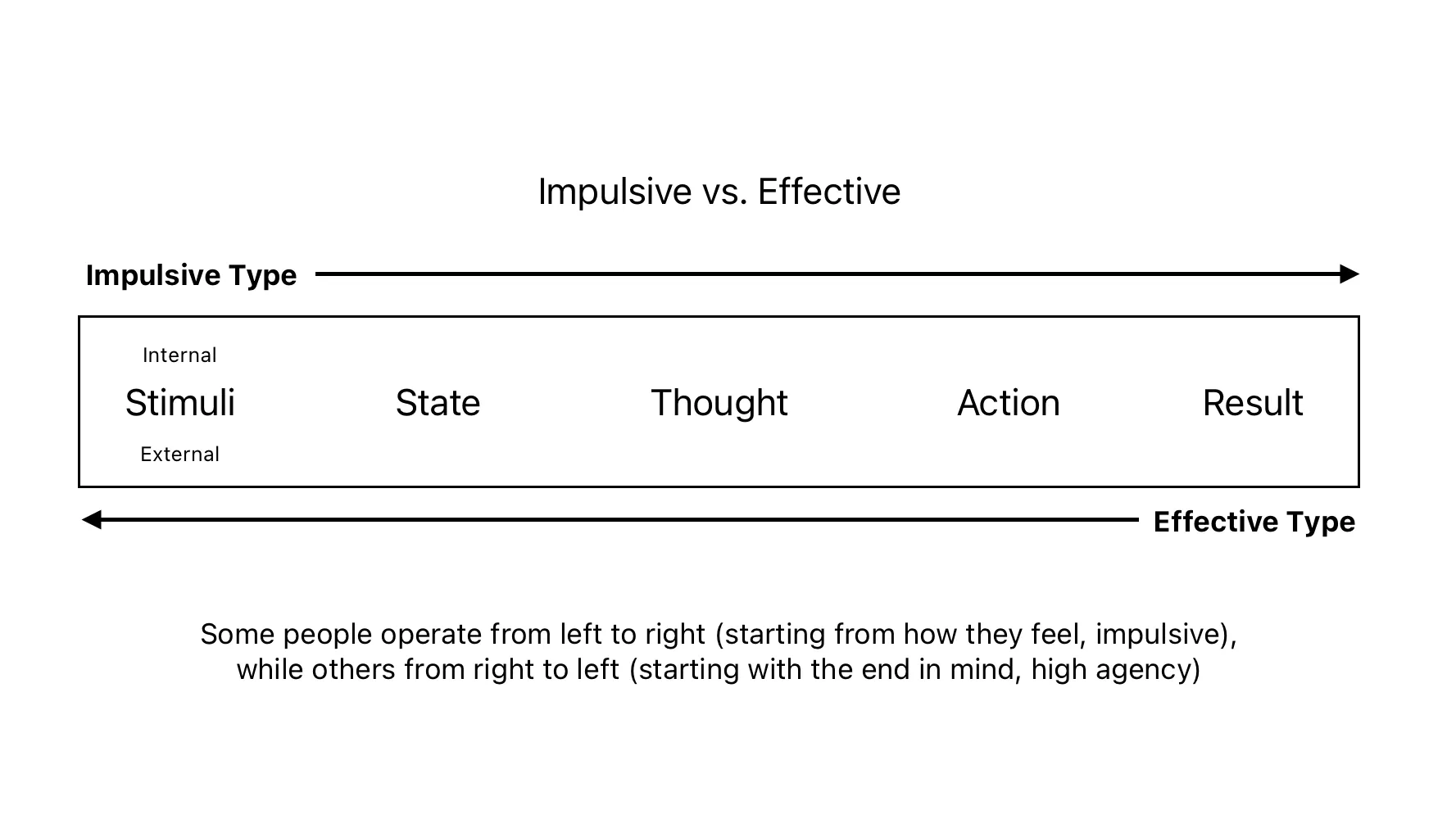
— people who are impulsive tend to require feeling to act. in some areas, they get this from authority figures like teachers or bosses who give deadlines. the impending deadline creates anxiety, which causes action.
— but they also have personal goals without any authority figures, such as exercise, side projects, learning things, etc. and when they inevitably procrastinate or don’t act, others tell them to “just do it.” but how?
— think about smiling as an example of how to “just do” things. there are two pathways to smiling: either something causes you to smile (a joke, etc.) OR you choose to smile (e.g. someone’s taking your photo)
— at one end is stimuli, at the other end is a result. in the first example, stimuli cause you to smile. in the second, you choose to smile (starting with the result first) — and in doing so, it will go the opposite direction in the pathway and actually create vague feelings of happiness.1
— instead of waiting around for the right stimuli to make you feel motivated to taking the action, start with a result in mind. then take action instead of trying to think… that is to say, value action (any action) over thought (thinking about the right thing to do or the correct way to do something.)
— getting started with action will naturally pull your thoughts towards to subject, then load your mind with the “state” of working on the project. as you get into the work, the work will stimulate your mind and you can enter flow.
— basically, to “just do it,” start with the end in mind. that means think about the result you want, then take any action that you come up with (instead of thinking what the right action to take is.)
— the key skill to getting better at “just doing it” becomes the ability to accurately come up with the result you want to achieve. if you show up to the gym as a noob for example, you won’t have any idea what to do but that’s okay, just go to one thing and do it. go to the next machine / station and do it. (the “result” being, finish some sets at the machine.)
— over time you will get more productive at going to the gym, because you will know the correct work to do at what time. productivity means the ability to transform action into the desired result, recursively. i.e. there’s a productive and unproductive way to do dumbbell curls. dumbbell curls are one of many ways to train your biceps. training your biceps is one of many exercises to build your body.
— I use the gym as an example for simplicity, but this principle can be applied to creative work, business, school.
— the most important thing is that you remember this pathway, waiting for the right stimuli to act is called the impulsive pathway. the effective pathway is going the opposite direction, starting with the desired result (starting with the end in mind,) then proceeding with action (any action you think of) immediately.
— those who are used to the impulsive pathway underestimate the value that action can have, even without thought. action itself will create the correct thoughts when they will be necessary.
— not only that, when you operate using the effective pathway, your state & thoughts are limited in scope and are about the action you are taking. this is also called flow. if you use the impulsive pathway, your state will be expansive and lead to unfocused thoughts, inevitably leading to more distraction & procrastination.
— the difference between state and thought is this: the vast majority of “thoughts” you have are discarded. this is also called chatter, but we will call it state: ephemeral things in your consciousness. your memory is a continuum and state is the thoughts with the quickest expiry.
— at the end of the day, it comes down to understanding this pathway, and if you feel you are procrastinating, realizing that you are simply trying to start from stimuli instead of starting from result.
— of course, it’s likely being stimuli first (impulsive) or action first is a psychological trait. if you’ve been impulsive your whole life, don’t expect reading this to change you overnight, or frankly that it’s possible to change at all.
— instead, you can aid yourself using Wiseday. your daily list specifically will help you manage yourself, acting as a source of stimulus for your goals. writing motivational prompts that help stimulate you to take the action you want can work with your psychology instead of against it.
Footnotes
-
Coles, N. A., Larsen, J. T., & Lench, H. C. (2019). A meta-analysis of the facial feedback literature: Effects of facial feedback on emotional experience are small and variable. Psychological Bulletin, 145(6), 610–651. ↩